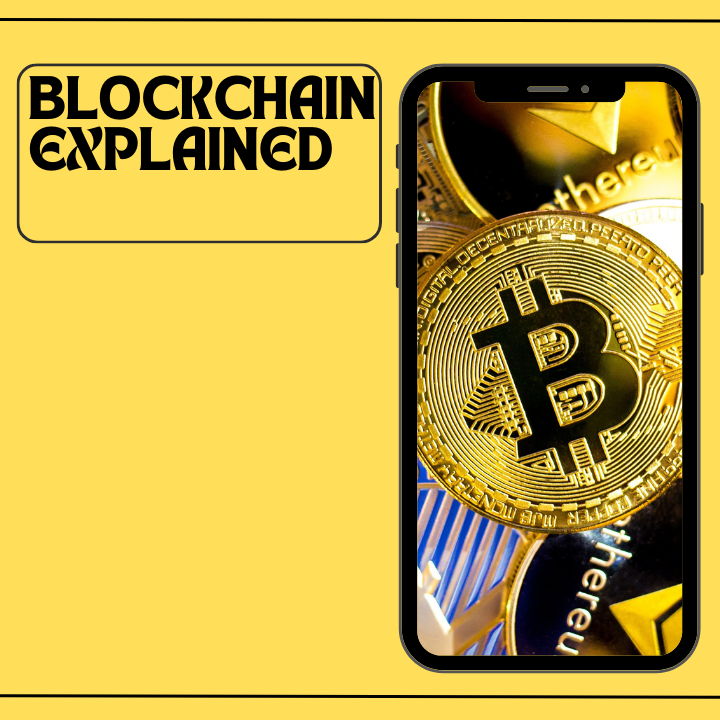
What Blockchain Is and Why It Matters Explained. At first glance, blockchain seems complicated. The word itself has a technical, almost frightening, feel to it. However, once the buzzwords are removed, the concept behind blockchain is actually fairly straightforward. Simply put, it is a smarter and safer method of recording data. The blockchain can be thought of as a shared digital notebook. Thousands of people have copies, rather than just one owner. Everyone sees every new piece that is written. And once it’s written, it can’t be erased or secretly changed. That is the secret. So, What Exactly Is Blockchain?
A blockchain is fundamentally a digital ledger. A ledger is merely a record book, similar to how banks keep track of transactions. What sets this apart? There is no centralized authority in charge of this ledger. It is distributed. Blocks are used to store information. Data, a timestamp, and a link to the block before it are all contained in each block. A block is sealed and joined to the chain when it is full. This is why it is called blockchain. And here’s the key part: once data is added, it’s extremely difficult to alter. That makes blockchain highly secure.
Why Blockchain is regarded as reliable Traditionally, we rely on banks, governments, or companies to manage records. Blockchain removes the need for that middleman. Instead, trust is built through math, cryptography, and consensus.
Every transaction must be verified by multiple participants on the network. The network denies any attempt at cheating. Simply stated. Similar to a group agreement, it If the majority of people say “yes,” the transaction is completed. If not, it doesn’t.
Cryptocurrency and the Blockchain Through Bitcoin, the majority of people learn about blockchain for the first time. Blockchain keeps track of every Bitcoin transaction. No bank needed. No centralized control. merely a transparent system in which all transactions can be verified. However, blockchain is not limited to cryptocurrency. A common misconception is that. Real-World Uses Beyond Crypto
Here’s something to think about. More than just money can be tracked by blockchain. It is used by supply chains to track goods from the factory to the shelf. Healthcare systems use it to secure medical records. Governments explore it for voting systems. Blockchain is used for everything from art to digital ownership (hello, NFTs!). Anywhere trust, transparency, and data security matter—blockchain fits.
Private vs. Public Blockchains Blockchains are not all created equal. Public blockchains, like Bitcoin and Ethereum, are open to everyone. Anyone is welcome to join, view transactions, and take part. Private blockchains are restricted. Businesses often use them internally to improve efficiency and security.
diverse scenarios of use. Same core idea.
Is Blockchain Perfect? Not at all. Let’s keep it real. Blockchain has challenges.
There are some networks that use a lot of power. During times of high demand, transactions may be sluggish. Regulations are still evolving. Scams also exist, typically as a result of misinterpreting the technology rather than blockchain itself. Like any powerful tool, it needs responsible use.
Why Blockchain Is Important for the Future Blockchain changes how we think about trust. Instead of relying on institutions, trust is built into the system itself.
That’s a big change. Systems that are both secure and transparent gain importance as digital interactions grow. The blockchain provides a basis for that future. Not immediately. Not entirely. But gradually. Last Thoughts You don’t need to be a developer to understand blockchain. Integrity, openness, and shared control are at its core. And truthfully? It matters because of this. Blockchain is not just a fad in technology. In today’s digital world, it is a novel method for recording truth. Everything else begins to make sense once you understand that.
2025-11-30